
The Rest of the Balance Sheet: Illiquid Assets and Deferred Comp
Rental property, private funds, and deferred comp now have first-class homes in RetireOdds, tracked separately so they never get mistaken for spendable cash.

For a while our net worth number was quietly lying to us, and it was lying in a specific, dangerous direction: it counted a rental property at whatever value we last plugged in, a year-old estimate we had stopped updating, and it counted Mayur's deferred compensation balance as if it were sitting in a brokerage account we could sell tomorrow. Neither was true. The rental was worth something we did not currently know. The deferred comp was money the IRS had not touched yet and a plan document controlled, not money either of us could spend on a Tuesday. A retirement plan built on top of that number was building on ground that only looked solid.
Illiquid assets, tracked like what they are
Rental property, private funds, collectibles, anything you cannot sell by Friday, now gets a real home instead of a rough guess in a spreadsheet field. Each one is tracked with a current value (NAV), cost basis, any attached debt, and unfunded commitments if it is the kind of asset that has them. Every valuation carries its own date and source, and a valuation older than a year gets flagged as stale — which is exactly the thing that was happening to our rental before anyone noticed.
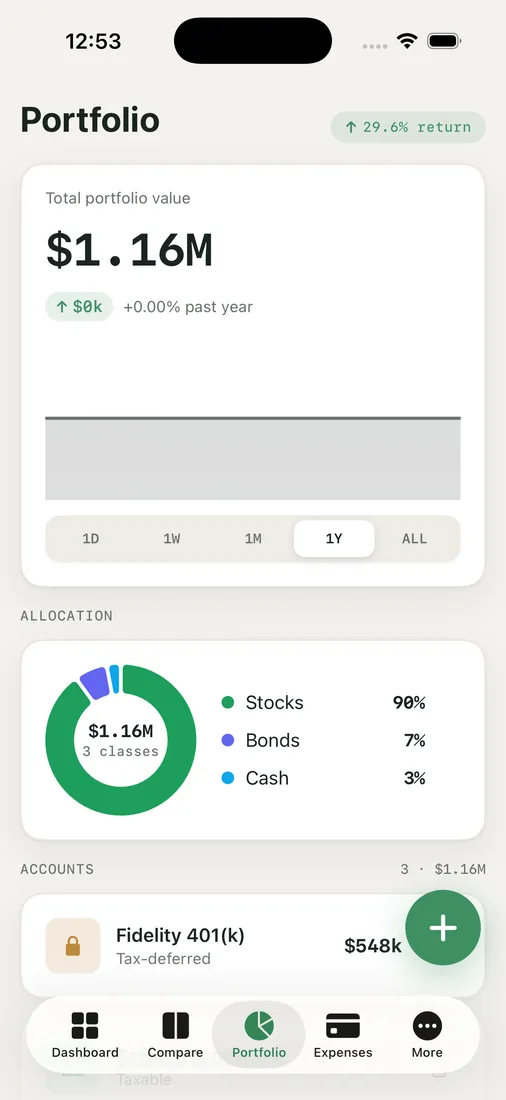
You also choose, per asset, whether it counts toward the plan itself or just sits alongside it for reference. A rental you intend to sell and fund retirement with is a different thing than one you plan to keep and pass down, and the plan should only lean on the one you are actually counting on.
Deferred comp, kept separate on purpose
Deferred compensation (NQDC) got the more surgical treatment, because it is the asset most likely to quietly inflate a net worth number without anyone meaning it to. Plans now track elections and their deadlines, payout schedules and installments, withholding, and tax character.
The deliberate design choice is that this lives as a separate, gross, pre-tax sub-ledger. A large deferred-comp balance sits next to your net worth, not folded into it, so it never gets treated like spendable after-tax money it is not. Election deadline warnings surface before a window closes, and statements from the plan administrator import via CSV instead of getting hand-typed in.

The principle underneath both
Illiquid assets and deferred comp are different problems on paper, but they share the same failure mode: both are real wealth that behaves nothing like the number in your brokerage account, and a plan that flattens them into one net worth figure is a plan that will surprise you exactly when you can least afford it, at the moment you actually try to spend. Keeping them visible but separate was the whole point.
Key takeaways
- Illiquid assets track NAV, cost basis, debt, and unfunded commitments, with dated, sourced valuations and a staleness flag past one year.
- Each illiquid asset can be included in the plan or tracked alongside it, your choice, per asset.
- Deferred comp (NQDC) is a separate, gross, pre-tax sub-ledger — never folded into liquid net worth — with election deadlines, payout schedules, and CSV import.
- The shared principle: money you can't sell tomorrow, or the IRS hasn't touched yet, needs to stay visible without being mistaken for cash.
If a rental or a deferred-comp balance has been quietly padding your net worth number, add it properly and see what your real, spendable balance sheet looks like.


